

Posted on

Residential Sod Installation in Castle Rock: From Lawn Removal to Final Roll

For homeowners planning residential sod installation in Castle Rock, CO, the visible green lawn is the final stage of a ground-up project. The lasting result depends on what happens before the first roll is laid: measuring the yard, removing failed turf, setting drainage, preparing the soil, checking irrigation, selecting a suitable turf, and protecting the new roots with attentive watering.

Castle Rock is listed in Green Valley Turf’s Denver Metro delivery zone, so delivery can be part of a coordinated installation plan. A site-specific conversation is still important. A sloped backyard, compacted soil, narrow side gate, existing sprinkler layout, and the condition of the old lawn can each change the scope. The right estimate defines the work rather than assuming every yard needs the same treatment.

Residential Sod Installation Castle Rock CO: The Project Sequence

A complete installation should move in a logical order. First, the site is measured, and the existing conditions are documented. Next comes removal and disposal, followed by grading, soil work, irrigation readiness, turf installation, cleanup, and a clear watering handoff. Completing those steps in reverse order can create expensive rework. For example, once sod covers the yard, correcting a low area or relocating a sprinkler head becomes harder.

Start with a site-specific estimate

A useful estimate begins with the lawn area in square feet and a clear view of the site. The quote discussion should identify the condition of the existing grass, weeds, rock, bare areas, soil compaction, grade changes, and drainage concerns. It should also cover access from the street or driveway to the lawn, gates, steps, retaining walls, utility features, and where removed material can be loaded for disposal.

Ask the estimator to clarify which tasks are included: old-lawn removal, haul-away and disposal, compost or topsoil, tilling, rough and finish grading, irrigation adjustments, sod delivery, installation, rolling, cleanup, and initial-care instructions. Those inputs are the practical quote factors. Square footage alone does not describe the labor, materials, access, or site preparation a lawn may require.

Remove the old lawn before building the new base

Old grass, weeds, rocks, and debris can interfere with preparation and grading. Green Valley Turf’s preparation guidance recommends removing existing turf before rototilling because a tiller may leave grass clumps that make a smooth grade difficult. A sod cutter is one way to lift existing turf cleanly.

Removal is also the point to decide how the material will leave the property. A professional scope should identify whether old sod, soil, roots, and debris are to be hauled away, kept on site, or handled by the homeowner. This avoids treating disposal as an unspoken detail. Once the lawn is down to a workable soil surface, the crew can see low areas, compacted spots, and obstacles that were hidden by the old turf.

Grade, soil preparation, and irrigation readiness

Establish the shape of the lawn first

The grade controls where water moves. Before soil preparation, higher areas may need to be cut down and low areas filled so water drains away from the home’s foundation. Green Valley Turf specifically advises establishing the rough grade before soil work when reshaping exceeds two inches, then setting a fine, smooth finish before sodding.

This is not a cosmetic detail. Sod follows the contour below it. A depression can collect water; a hump can dry faster; a grade that directs water toward the house creates a problem that new turf cannot solve. The final surface should also allow for the thickness of the sod next to patios, walks, driveways, and edging.

Build a root zone, then check the sprinkler system

Soil preparation is where a replacement lawn gains its foundation. Green Valley Turf describes incorporating compost into tilled soil to improve the structure of clay soils and help sandy soils retain moisture. Its guide calls for removing rocks and debris, spreading compost, and tilling it into the soil before firming and fine grading. A soil test can help determine whether specific amendments are warranted rather than adding products by habit.

Irrigation needs attention while the ground is open. Ask whether sprinkler heads clear the intended grass height, whether coverage reaches corners and edges, and whether zones apply water evenly across sunny and shaded parts of the lawn. Colorado State University Extension’s watering-efficiency guidance notes that irrigation zones should group areas with similar water needs and that uneven distribution can lead to overwatering in an effort to keep dry spots green. Repairing coverage before installation is generally simpler than lifting newly rooted sod later.

Choose sod for the yard’s use and exposure

Turf selection should reflect how the lawn will be used, the amount of sun, the site’s exposure, and the desired maintenance approach. Green Valley Turf’s Colorado Blue™ sod is a Kentucky bluegrass blend described as dense and fine-textured for home lawns, pets and kids, high-traffic areas, full sun to light shade, and Colorado conditions. That makes it a relevant option to discuss for a Castle Rock family lawn, but the final choice should match the actual site.

Share the areas that receive persistent shade, wind, concentrated foot traffic, pet use, or reflected heat from hardscape. Discuss those conditions before ordering. If water use is a central concern, ask for a turf and irrigation conversation rather than assuming one product fits every exposure. Green Valley Turf’s soil-preparation guidance and current product information give homeowners a helpful starting point for that conversation.

From the first roll to a finished, clean site

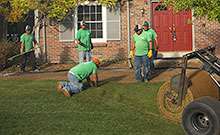
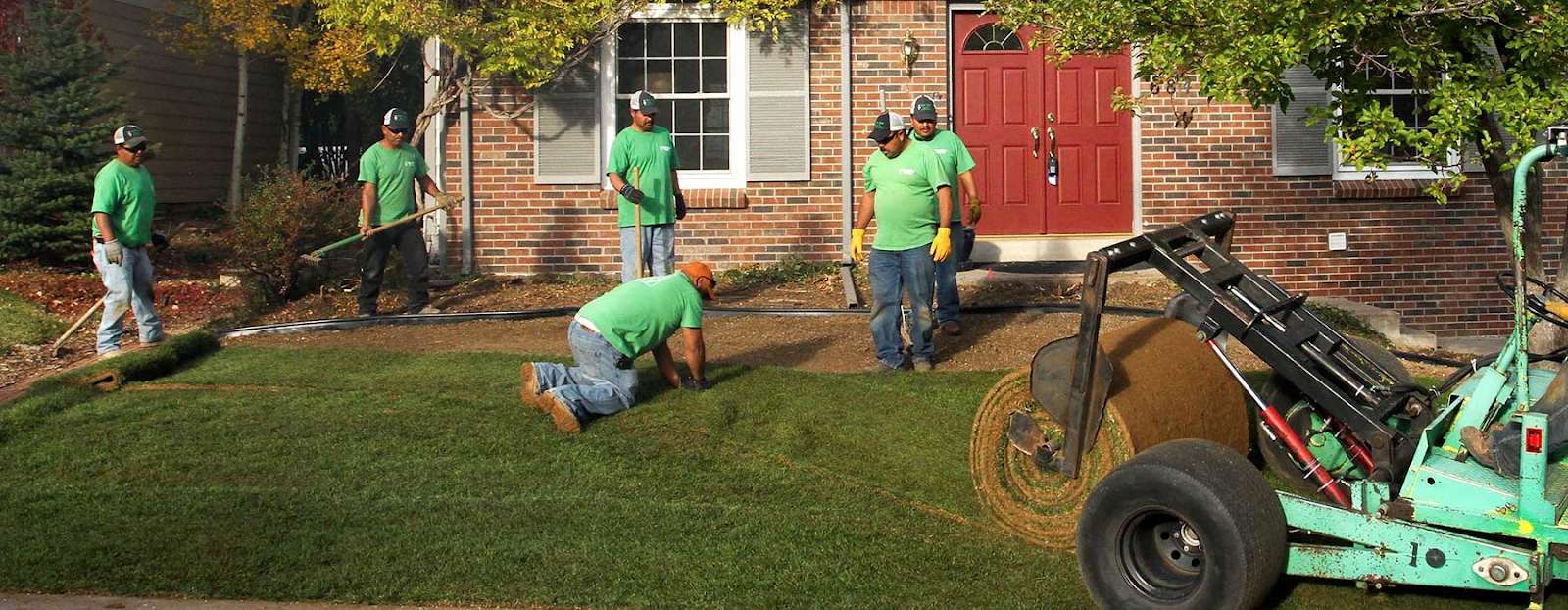
On installation day, the crew should bring sod to a smooth, moist but not saturated surface. Starting from a straight edge helps keep the layout aligned. Pieces are fitted tightly without overlapping, and seams are staggered in a brick-like pattern rather than allowed to run in one continuous line. On slopes, the installation plan may need provisions to hold sod in place while it roots. Green Valley Turf’s sod-installation guide also recommends rolling after placement to improve sod-to-soil contact and reduce air pockets.

The last roll is not the last task. A complete closeout includes trimming edges, collecting offcuts and packaging, clearing the work area, and confirming the watering plan. Homeowners should know where the irrigation controller is, which zones serve the new sod, and who will adjust the schedule as conditions change. Green Valley Turf’s current delivery information can help with the delivery component, while the installation estimate should define the full work scope for the property.

Water the new sod for roots, not just green color

New sod needs consistent moisture in both the sod and the soil immediately beneath it while roots establish. Colorado State University Extension’s new-sod establishment guidance advises keeping new sod and the underlying soil moist, not soggy, and says roots are typically well established in two to three weeks; a gentle tug can help indicate whether the sod has rooted. Weather, sun, wind, soil, and irrigation output influence the actual watering need, so observe the lawn instead of relying on a fixed timer alone.

Once the sod is anchored, transition toward less frequent, deeper irrigation to encourage roots to grow into the prepared soil. On compacted or clay soils and slopes, CSU Extension recommends cycle-and-soak watering, using shorter applications separated by time to let water infiltrate rather than run off. Check that sprinklers are not missing edges, overspraying hardscape, or creating a consistently dry strip. Delay routine traffic until the sod resists a gentle lift, and mow only when conditions support it without rutting or pulling the new turf.

Castle Rock sod installation FAQs

What information should I provide for a sod-installation quote?

Provide the lawn’s approximate square footage, site photos, existing lawn condition, desired removal and disposal scope, access constraints, grade or drainage concerns, sprinkler status, and the desired turf use. The more accurately the site is described, the better the estimate can separate necessary work from optional improvements.

Does existing grass need to be removed before new sod?

In most replacement projects, removing old turf creates a cleaner surface for grading and soil preparation. It prevents grass clumps from interfering with tilling and makes it easier to evaluate the base before the new sod is installed.

Should irrigation be checked before the sod arrives?

Yes. Check operation, coverage, head height, and runoff risk while the soil is accessible. A new lawn needs uniform moisture during establishment, and irrigation corrections are more straightforward before sod covers the work area.

Can sod be installed late in the season?

Sod can be installed during the growing season when quality sod is available and the soil is prepared, but new roots should establish before freezing conditions. Ask Green Valley Turf about current project scheduling and turf availability for your address rather than relying on a general calendar.

Get a Castle Rock installation quote built around your yard

A successful lawn replacement starts with a scope that matches the property. If your Castle Rock project needs old sod removal, disposal, soil preparation, grading, irrigation review, turf selection, installation, cleanup, and a watering plan, request a site-specific Get Quote consultation. Bring measurements and photos if available, then confirm the details that affect the final scope.

For residential sod installation in Castle Rock, CO, the final roll matters, but the work below it determines how well the lawn can establish. Build the project in the right order, document the scope, and give the new sod the moisture and attention it needs to root.

Questions about your project? Call Green Valley Turf at (303) 798-6764 to confirm current scope, availability, and next steps.
Posted on

Farm-Fresh Sod Delivery to Highlands Ranch: Zones, Ordering and Site Access

For a Highlands Ranch homeowner replacing a worn lawn, farm fresh sod delivery Highlands Ranch CO is not simply a product decision. It is a coordinated jobsite delivery. The right order begins with an accurate area measurement, a prepared base, a working irrigation system, and a delivery route that a loaded truck can use safely. Addressing those details before ordering helps the sod arrive when your project is ready for it.

Green Valley Turf lists Highlands Ranch in its published Denver Metro delivery area. Its shipping and delivery page is the current source for delivery-zone coverage and charge structure.21 Because policies and operational conditions can change, review that page and confirm the details for your address when you order.

Is Highlands Ranch Eligible for Sod Delivery?

Highlands Ranch appears in Green Valley Turf’s published Denver Metro zone, also identified as Zone 1 in the sod delivery charge table.21 That gives local customers a defined starting point for arranging a delivery, rather than requiring a distance-based quote solely because the property is outside the regular service area.

Eligibility does not replace site review. A complete order conversation should include the exact delivery address, the turf you want, the measured sod area, and the physical route from the street to the intended staging area. A cul-de-sac, steep drive, narrow private lane, active construction, gated community, or restricted delivery period can affect how a delivery is planned. If your HOA has rules for commercial vehicles, temporary staging, or work hours, check them before selecting a delivery date.

Farm Fresh Sod Delivery Highlands Ranch CO: How Charges Are Structured

Green Valley Turf does not publish one blanket delivery charge for every Highlands Ranch order. Its current table organizes sod delivery charges by square-footage range and delivery zone. The page explains that the final delivery charge uses a per-square-foot component plus a flat amount tied to the zone and the square footage ordered.21

That structure makes a measured order essential. Do not estimate from the lot size or from a lawn photo alone. Measure only the areas that will receive sod, then share the total with Green Valley Turf so the current charge table can be applied correctly. The delivery page is the appropriate place to review the current figures rather than relying on a prior invoice, an online discussion, or a neighbor’s project.

When comparing a delivery-only project with a complete installation, keep the scopes separate. Delivery addresses the transport of the sod to the site. Removal of old turf, soil work, grading, irrigation repairs, and laying the sod are project tasks to plan independently or discuss through residential sod installation.24

Measure the area before you order

Start with the finished lawn footprint. For a rectangle, multiply length by width. Divide an irregular lawn into rectangles, triangles, and circles, calculate each section, then combine the results. Exclude patios, beds, walkways, and areas that will be mulch or hardscape. Mark sprinkler heads, valve boxes, trees, and utility features while you measure so your installation plan matches the order.

Green Valley Turf sells its Colorado Blue sod in 6-square-foot slabs, and the product page notes that orders may be rounded up to the nearest 6 square feet.22 Share your measured total and explain where cuts will be needed. This gives the sales team the information to help align the order with the product format. Do not assume a universal overage percentage fits every yard. Curves, islands, tight boundaries, and a simple rectangular lawn create different cutting needs.

Order with the jobsite in mind

A useful delivery request gives the team a clear operational picture. Have these details ready:

  • Exact Highlands Ranch delivery address and any gate, call box, or HOA instructions.
  • Total square footage and the turf product you are considering.
  • Preferred delivery date or installation window, subject to confirmation.
  • Driveway width, curb conditions, slope, overhead branches or wires, and nearby obstructions.
  • Gate widths, steps, side-yard passages, and the proposed sod staging location.
  • Whether you will install the sod yourself or coordinate an installation crew.

Colorado Blue is described by Green Valley Turf as a Kentucky bluegrass blend for uses including home lawns, with full sun to light shade listed on its product page.22 Product selection should account for your lawn’s sun exposure, traffic, irrigation capability, and maintenance expectations. Check current product status before committing a crew or rental equipment. Green Valley Turf’s Littleton location page provides contact details and directs customers to check inventory before pickup.25

Access and placement: plan the route, not just the address

A delivery truck can reach an address without having a workable route to every part of a property. Before delivery, clear vehicles and movable obstacles from the access route. Identify low branches, overhead lines, steep transitions, landscape edging, gates, steps, retaining walls, and soft or recently watered ground. If the driveway is shared or narrow, consider where the truck can safely stop without blocking traffic.

Describe the desired placement area when you request delivery, but do not assume sod can be placed beyond curbs, through narrow side yards, over walls, or in a backyard. Those conditions need to be reviewed with the delivery team before the order is finalized. The customer is responsible for providing accurate access information, arranging any needed property or HOA permission, preparing a clear staging area, and having a person available if access instructions must be provided on arrival. Green Valley Turf should confirm the practical delivery and placement plan for the specific site.

This advance review also protects the installation sequence. Keep the staging area close enough to the prepared lawn to avoid unnecessary handling, while leaving a safe route for the delivery. If you are hiring installers, share the confirmed delivery plan with them so site preparation, arrival, and laying the sod are coordinated.

Prepare the base and irrigation before sod arrives

Sod will not correct a drainage, compaction, or irrigation problem beneath it. Remove debris and old plant material as appropriate, shape the grade for drainage, and create a smooth, firm planting surface before delivery. Run every irrigation zone and correct obvious coverage gaps, broken heads, or leaks before the new lawn is down. Green Valley Turf’s soil-preparation video is a useful starting point for planning the base beneath the turf.23

A soil test can inform amendment decisions. Colorado State University Extension recommends testing soil before planting and notes that amendments are easiest to incorporate before planting.26 It also advises that soil conditions, weather, grass health, and species should guide irrigation practices.26 For a site with persistent puddling, a pronounced slope, heavy compaction, or unclear drainage, resolve the underlying condition before scheduling the sod delivery.

Install sod promptly after delivery and begin watering immediately after installation, consistent with Green Valley Turf’s installation guidance.24 Keep the initial care plan site-specific. New sod needs moisture while it establishes, yet fixed watering minutes cannot be transferred from one yard to another. Soil texture, slope, shade, sprinkler output, weather, and local water rules all matter.

Denver Water recommends a cycle-and-soak approach for established lawns when water would otherwise run off: divide irrigation into increments and allow time for water to soak into the soil.27 For your new lawn, follow the sod provider’s establishment instructions, observe whether water is reaching the root zone, and check current water restrictions with your local provider. Once the lawn is established, CSU Extension recommends a typical Colorado mowing height of 2.5 to 3 inches and cautions against removing over one-third of the grass height in one mowing.26

Timing: confirm the delivery only after the site is ready

Do not set a delivery date until the lawn area, irrigation, access route, and installation labor are lined up. Weather, product selection, order volume, and delivery operations affect scheduling, so a requested date is not a promise until Green Valley Turf confirms it. If preparation is unfinished, move the request forward only when the base can be completed and the sod can be installed promptly.

For a DIY project, stage the tools before the truck arrives: utility knife, hose and sprinkler equipment, rake, wheelbarrow if useful for the layout, and a plan for fitting seams and edges. For an installer-led project, provide the site contact, gate instructions, and staging plan to both the installer and delivery team. That small amount of coordination can prevent a delivery-day decision from becoming a delay.

Frequently Asked Questions

Is Highlands Ranch in Green Valley Turf’s regular sod delivery area?

Yes. Highlands Ranch is listed in Green Valley Turf’s Denver Metro delivery zone and in the Zone 1 sod delivery charge table.21 Confirm your exact address and current delivery details when you place the order.

Why does Green Valley Turf need my square footage before quoting delivery?

The published sod delivery structure changes by square-footage range and zone, with a per-square-foot component and a zone-related flat amount.21 Accurate measurements allow the current table to be used for your project.

Can I ask for sod to be placed in my backyard?

You can request a staging location, but backyard placement is site-dependent. Provide gate widths, steps, slopes, access restrictions, and route obstacles before ordering. Green Valley Turf can then review what is practical for the delivery rather than making an unverified placement assumption.

What should I finish before sod is delivered?

Complete removal and grading work, check irrigation coverage, clear the delivery route, identify the staging area, and arrange labor to install the sod promptly. A prepared base is as important as the turf itself.

Should I use a fixed watering schedule for new sod?

No. Use the establishment guidance supplied for your order, then adjust based on weather, soil, sun exposure, and irrigation performance. Review local watering rules before programming the controller.26

Plan Your Highlands Ranch Sod Delivery with Clear Site Details

A successful farm fresh sod delivery Highlands Ranch CO project starts with an accurate measurement and ends with a prepared, watered lawn. Review the current zone and charge information, share your access details early, and coordinate placement with the team rather than making assumptions about the route.

Ready to plan your order? Learn More and provide your Highlands Ranch address, square footage, sod preference, access notes, preferred delivery window, and installation plan.

Questions about your project? Call Green Valley Turf at (303) 798-6764 to confirm current scope, availability, and next steps.
Posted on

Colorado Blue Sod Pickup in Littleton, CO: Availability, Quantities, and Loading Guide

If you are looking for Colorado Blue sod pickup in Littleton, Green Valley Turf’s Littleton location offers Colorado Blue™ sod for pickup at 13159 US-85, Littleton, CO 80125. The location’s published hours are Monday through Friday, 7:30 a.m. to 5:00 p.m.; Saturday, 7:30 a.m. to 3:00 p.m.; and Sunday, closed. Call (303) 798-6764 before leaving to confirm current inventory, pickup details, and weather-related harvesting conditions. View the Littleton location and directions.

Green Valley Turf identifies Colorado Blue as stocked daily for pickup and says it sells quantities ranging from one piece to several pallets. Staff load customer vehicles, but the appropriate vehicle and number of trips depend on the order, passengers, tools, and the vehicle’s documented payload rating.

This guide explains how much to order, whether pickup or delivery makes more sense, how to prepare your lawn and vehicle, and what to do after the sod arrives.

Colorado Blue sod: product and quantity facts

Colorado Blue™ is a Kentucky bluegrass blend designed for Colorado conditions. Green Valley Turf describes it as a dense, fine-textured turf for full sun to light shade, high-traffic lawns, pets and children, parks, commercial properties, and sports uses. Those are product characteristics, not a guarantee that the blend is right for every site. Consider shade, traffic, pets, irrigation coverage, soil condition, water availability, and the maintenance level you can provide.

How big is one Colorado Blue sod slab?

Green Valley Turf’s pickup information describes a sod slab as approximately 21 inches by 41 inches, covering 6 square feet, and weighing approximately 30 to 35 pounds. A full pallet contains 70 slabs, covering approximately 420 square feet.

These figures are useful for estimating order size and handling effort. They do not determine whether a particular car, pickup, SUV, or trailer can safely carry the order. Use the vehicle manufacturer’s payload rating and include passengers, tools, accessories, and the sod load in the calculation.

How much sod should you order?

Measure the areas that will receive sod and divide an irregular lawn into simple rectangles, squares, or triangles. Calculate each area, add the totals, and subtract beds, trees, hardscape, and other features that will not be sodded. Because the product is sold in 6-square-foot slabs, the order may be rounded up to the next six square feet.

Bring the total square footage and, if useful, a simple sketch when you call or order. If you are comparing prices with other suppliers, compare the current cost per square foot, not only the price per roll, slab, or pallet. For current pricing and ordering options, use the Colorado Blue sod product page. Pickup, delivery, installation, soil preparation, and tear-out may be priced differently, so confirm the current total before scheduling the work.

Pickup or delivery: which is better for your order?

Pickup can be practical when the quantity is manageable, your vehicle has sufficient payload, and the lawn is ready for installation as soon as you return. Delivery may be more appropriate when the order is large, several trips would delay installation, or you do not have a vehicle and labor plan suitable for the load.

Pickup may make sense when…Delivery may make sense when…
The order is small or fits safely within the vehicle’s documented payload.The order is too large for a safe vehicle load.
The site is prepared and can be installed promptly.Multiple trips would leave sod waiting or delay installation.
You can unload and distribute the slabs safely.You need pallets placed near the work area.
You can transport the sod directly to the property.You prefer scheduled delivery and forklift placement.

Green Valley Turf’s sod delivery information explains that deliveries are scheduled and pallets may be placed with truck-carried forklifts. Delivery access may require approximately 8 feet for the forklift. Confirm current delivery timing, charges, access requirements, and placement details before ordering.

How to order Colorado Blue sod for Littleton pickup

There are two practical ways to arrange pickup. Choose the method that matches your order and how much certainty you need before traveling.

Online store pickup

Use the store-pickup instructions to place an order, select the Littleton store at checkout, and wait for the store-pickup notification. When you arrive, bring the pickup notification, order number, and a government-issued photo ID. Store pickup applies to the specific location selected during checkout and should be completed during that store’s regular operating hours.

Call-ahead or drop-in pickup

Green Valley Turf says Colorado Blue is stocked daily for pickup and that customers can purchase from one piece to several pallets. Inventory is not a live guarantee, however. Call (303) 798-6764 before driving over, especially for a large order, Saturday pickup, a long trip, or a project affected by rain, snow, or freezing conditions.

The current pickup page notes that rain and snow can prevent harvesting when conditions are too wet or frozen. Calling ahead helps confirm whether the product can be prepared and loaded when you need it.

Prepare the lawn before pickup

Sod should arrive at a site that is ready for installation. Complete demolition, grading, drainage corrections, irrigation repairs, tool setup, and edge layout before pickup day. Have helpers available if the project requires them.

Prepare the soil and grade

Remove debris, large stones, clods, and unwanted vegetation. Make permanent grade adjustments before the sod arrives and direct drainage away from building foundations. A finished surface should be smooth and firm rather than loose and fluffy.

If the soil is compacted, the necessary cultivation depth depends on the site. Colorado State University’s PlantTalk guidance recommends cultivating compacted soil to a depth of 12 inches while cautioning against working soil that is too wet or over-cultivating it. The same guidance discusses incorporating organic matter into the upper six to eight inches and moistening the soil six to eight inches deep several days before sod arrives.

Green Valley Turf’s own soil-preparation guidance discusses grading, topsoil depth, pH testing, fertilizer, and rolling. Treat these measurements as site-preparation guidance rather than universal prescriptions. Soil type, compaction, drainage, grading, and test results should determine the appropriate preparation.

Test irrigation before the sod arrives

Identify sprinkler heads, repair leaks, test coverage, and make sure the prepared area can be watered without leaving standing water or creating runoff. The soil should be slightly moist when sod is transplanted, not so wet that installation traffic severely compacts it.

For more detail, review Green Valley Turf’s soil-preparation guide before pickup.

Prepare the vehicle and plan loading

Before heading to Littleton:

  1. Check the owner’s manual or door-jamb label for the vehicle’s payload rating.
  2. Count passengers, tools, equipment, accessories, and the planned sod load within that rating.
  3. Clear the truck bed, trailer, or cargo area.
  4. Confirm that the trailer, tie-down points, and load-securing equipment match the vehicle and load.
  5. Tell the Green Valley Turf team what vehicle you brought and how much sod you intend to collect.
  6. Ask whether one trip is sensible or whether multiple trips or delivery would be safer.
  7. Keep children, pets, and loose tools away from the loading area.

Green Valley Turf’s pickup information says forklifts are used to load pallets into trucks or trailers and that cars are hand-loaded. Do not assume that a vehicle’s size determines its capacity. A pickup, SUV, car, and trailer may have very different payload limits.

If the order exceeds the vehicle plan, consider sod delivery rather than overloading the vehicle. Drive directly to the prepared site after pickup and unload in an order that makes installation easier.

From pickup to installation

Sod is a perishable landscape material. Plan pickup around installation rather than unrelated errands. Do not load the sod and then leave it in a parked vehicle while completing other tasks.

After arriving at the property, begin along a straight boundary such as a driveway, fence, or patio. Set slabs tightly together without stretching them. Stagger seams across adjacent rows instead of aligning them continuously. Cut pieces with a sharp utility knife and preserve the prepared grade rather than using sod to fill major low spots.

As installation proceeds, make sure each slab has contact with the soil below. Avoid unnecessary repeated traffic on freshly laid turf. For a visual overview, see Green Valley Turf’s sod installation video.

Watering and establishment

Water freshly laid sod immediately and check moisture beneath a lifted corner. Newly installed sod and the underlying soil should remain moist, not soggy. The right frequency depends on weather, soil texture, sprinkler output, sun, wind, runoff, and the condition of the lawn.

Green Valley Turf’s New Sod Care guide provides more detailed early-care guidance. Avoid relying on a fixed schedule if the soil is drying out, water is pooling, or runoff is occurring.

A gentle tug after approximately two to three weeks can help indicate whether the sod has rooted into the soil. Once established, reduce watering frequency while applying more water per irrigation cycle to encourage deeper roots.

Check current Littleton-area watering rules

Water providers and rules differ by address. If the property is served by Denver Water, check the current watering rules and establishment-permit information before scheduling new sod or watering outside the assigned schedule.

As of September 18, 2026, Denver Water states that lawn watering and spray irrigation will be prohibited after September 30, and that watering establishment permits will not be available after September 30 until further notice. This is time-sensitive information. Recheck the current rules before pickup because restrictions, permit availability, and seasonal policies can change.

The City of Littleton also maintains a Water Conservation Program with information about waterwise landscape options and lawn-replacement incentives. That resource may be relevant if a lower-water landscape is a better fit for the property.

Frequently asked questions about Colorado Blue sod pickup in Littleton

Where can I pick up Colorado Blue sod in Littleton?

Green Valley Turf’s Littleton location is at 13159 US-85, Littleton, CO 80125. Published hours are Monday through Friday, 7:30 a.m. to 5:00 p.m.; Saturday, 7:30 a.m. to 3:00 p.m.; and Sunday, closed. Call (303) 798-6764 to confirm current inventory and pickup conditions before traveling.

Is Colorado Blue sod available today?

Green Valley Turf lists Colorado Blue as stocked daily for pickup, but daily stock does not guarantee live inventory at the time you arrive. Call ahead to confirm availability, order size, weather conditions, and pickup timing.

Can I buy one piece, or do I need a full pallet?

Green Valley Turf says it sells quantities ranging from one piece to several pallets. A full pallet contains approximately 70 six-square-foot slabs, or 420 square feet.

How large and heavy is one Colorado Blue slab?

A slab is approximately 21 by 41 inches, covers 6 square feet, and weighs approximately 30 to 35 pounds, according to Green Valley Turf’s current pickup information.

Does Green Valley Turf load cars, trucks, and trailers?

The current pickup information says pallets are loaded into trucks or trailers with forklifts and cars are hand-loaded. The customer remains responsible for bringing a vehicle with adequate payload and for following safe load-securing practices.

Can I order Colorado Blue sod online for Littleton pickup?

Yes. Place the order online, select the Littleton store at checkout, and wait for the store-pickup notification. Bring the notification, order number, and government-issued photo ID when collecting the order.

How much does Colorado Blue sod cost?

Use the current Colorado Blue product page and its ordering or calculator tools for current pricing. Calculate the project by square foot and confirm whether pickup, delivery, installation, soil preparation, or tear-out changes the total. Prices and charges can change, so avoid relying on an old static price.

Should I pick up the sod or use delivery?

Pickup may be practical for a small or safely manageable order when the lawn is ready and the vehicle meets its payload rating. Delivery may be better for a large order, multiple pallets, limited labor, or a vehicle that cannot safely carry the load. Compare the current pickup and delivery options before ordering.

Can rain or freezing weather delay pickup?

Yes. Green Valley Turf states that rain and snow can prevent harvesting when conditions are too wet or frozen. Call before traveling if the weather could affect harvesting or access.

When should I lay sod in Colorado?

Install fresh sod when it is available, the soil is prepared and workable, and you can transport, lay, and water it promptly. Avoid installing over muddy soil that will compact severely or scheduling pickup when current watering restrictions make establishment impractical. CSU guidance recommends preparing the soil in advance and keeping it slightly moist when sod is transplanted.

When can the lawn be used?

Limit traffic while the sod roots into the prepared soil. Green Valley Turf gives a general two-to-four-week range for returning a new lawn to regular use, but weather, soil preparation, watering, and rooting determine the actual timing. Inspect the lawn and test rooting gently rather than relying on appearance alone.

What should be complete before I collect sod?

The area should be measured, cleared, graded, and ready for installation. Irrigation should be tested, tools and helpers should be ready, the vehicle or delivery plan should be confirmed, and the soil should be prepared and slightly moist.

Final pickup checklist

  • Before leaving for Green Valley Turf’s Littleton location, confirm:
  • The lawn measurement and required number of slabs.
  • The current price and pickup or delivery option.
  • The Littleton location, hours, and inventory.
  • The vehicle’s payload rating and load-securing plan.
  • The prepared soil, working irrigation, tools, and helpers.
  • A direct route from the yard to the installation site.
  • Current water-provider rules for establishing new sod.

For current availability and next steps, call Green Valley Turf at (303) 798-6764. You can also review Colorado Blue sod online, see the Littleton location, or request delivery if the order is not appropriate for safe self-hauling.

Posted on

Visit the Best Sod Farm Near Me: Littleton Colorado Pickup

For many DIY homeowners and local landscaping contractors, the ability to pick up fresh sod on demand is a critical component of a successful project. While delivery is convenient for large jobs, smaller patch repairs or weekend yard makeovers often require the flexibility of grabbing a few rolls exactly when you need them. If you are searching for the best sod farm near you in the south Denver metro area, look no further than Green Valley Turf Co.’s convenient retail location in Littleton, Colorado.

Located at 13159 US-85, our Littleton facility bridges the gap between our massive 500-acre farm in Platteville and the residents of Denver, Highlands Ranch, Centennial, Englewood, and beyond. We understand that when you are in the middle of a landscaping project, you do not have time to drive an hour north to secure fresh materials. Our Littleton hub is fully stocked daily with our premium, farm-fresh sod, ensuring you have immediate access to the highest quality turf in the state.

When you visit our Littleton location, you are guaranteed a superior product compared to the stressed, imported grass often found sitting on the hot asphalt of big-box home improvement stores. Our sod is cut fresh at our Platteville farm and transported directly to Littleton. We keep our inventory shaded and properly hydrated, so whether you are buying a single 10-square-foot roll to patch a dog spot or a full pallet for a larger area, the grass you take home is healthy, vibrant, and ready to thrive.

Furthermore, we pride ourselves on exceptional customer service. You do not need to worry about straining your back loading heavy, muddy rolls of sod into your vehicle. Our friendly, experienced staff operates on-site forklifts and will gladly load the pallets directly into your pickup truck or trailer. We make the purchasing process as fast and effortless as possible, so you can get back to your project.

While you are here, our knowledgeable team is available to answer any questions you have about soil preparation, installation techniques, or post-installation watering schedules. We are not just a supplier; we are your local turf experts. Whether you are a first-time homeowner tackling your first lawn project or a seasoned contractor who has worked with us for years, you will receive the same attentive, expert service that has made Green Valley Turf Co. the most trusted name in Colorado sod since 1962.

Skip the big-box stores and get your grass directly from the grower. Need fresh sod today? Get directions to our Littleton location and pick up farm-fresh turf today.

Posted on

The Premier Sports Field Sod Supplier in Denver, Colorado

Constructing and maintaining a high-performance sports field requires a level of precision and quality that goes far beyond standard residential landscaping. Whether it is a professional stadium, a university soccer complex, or a municipal football field, the turf must be able to withstand extreme wear and tear, drain rapidly during heavy rain, and provide a safe, consistent playing surface for athletes. When facility managers and groundskeepers need the highest caliber turf available, they turn to Green Valley Turf Co., the premier sports field sod supplier in Denver, Colorado.

The foundation of a superior sports field is, quite literally, the soil it is grown on. Standard sod is grown in native clay or loam soils, which can severely compromise the drainage capabilities of a highly engineered sand-based sports field. To solve this, Green Valley Turf grows our elite sports turf on a 100% USGA (United States Golf Association) spec sand base. This ensures complete compatibility with custom-built sand-based fields, guaranteeing maximum water infiltration and preventing the restrictive layering that causes surface pooling and muddy conditions.

Furthermore, we utilize an advanced “grown on plastic” technique for our premium sports turf. By growing the sod over an impermeable plastic barrier, the roots are forced to intertwine and weave together rather than growing deep into the earth. When the sod is harvested, the entire root mass is preserved intact. This creates an incredibly dense, strong turf mat that is virtually indestructible upon installation. This method allows for true “Lay and Play” readiness; the field can safely host athletic events almost immediately after the sod is rolled out, eliminating the weeks of downtime typically required for root establishment. According to the Sports Turf Managers Association, minimizing field downtime is one of the most critical factors for athletic facilities managing multiple sports seasons.

Our flagship product for athletic facilities is our HD Sports 2.0 blend, an elite combination of Kentucky bluegrasses specifically selected for rapid recovery, intense wear tolerance, and vibrant winter color. For facilities seeking maximum water conservation and heat tolerance, we also offer Tahoma 31™ Bermudagrass, which has become increasingly popular for sports fields across the transition zone.

The Big Roll format is the standard for large-scale sports field installations. Our 4-foot by 80-foot rolls allow crews to cover expansive field areas rapidly, minimizing the number of seams and creating a more structurally sound surface. The fewer the seams, the less risk of turf separation and uneven playing surfaces that can pose injury risks to athletes.

Green Valley Turf Co. has a proven track record of supplying and installing pristine turf for some of the most high-profile athletic facilities in the region. We understand the high stakes of sports turf management and are dedicated to providing products that elevate the safety and performance of the athletes who play on them.

Upgrade your athletic facility with the best turf in the industry. Learn more about our specialized sports field sod supplier in Colorado capabilities.

Posted on

Fast Big Roll Sod Installation for Denver Commercial Projects

When managing large-scale commercial landscaping projects, efficiency, durability, and cost-effectiveness are the primary concerns. Whether you are turfing a sprawling corporate campus, a new municipal park, or a residential development’s common areas, traditional standard-size sod rolls can be incredibly labor-intensive and time-consuming to install. For contractors and project managers looking to maximize productivity and minimize long-term maintenance issues, Green Valley Turf Co. offers the ultimate solution: fast Big Roll sod installation.

Our Big Roll sod is specifically designed for commercial applications. Measuring 4 feet wide by 80 feet long, a single Big Roll covers 320 square feet of area. Compared to standard 10-square-foot rolls, the efficiency gains are massive. Utilizing specialized tractor-mounted installation equipment, our crews — or your own trained teams — can unroll vast expanses of turf in a fraction of the time it would take to lay standard pallets by hand. According to Turfgrass Producers International, Big Roll installation can reduce labor hours by up to 75% compared to traditional hand-laying methods on large commercial sites. This drastically reduces labor costs and accelerates project timelines, allowing you to move on to the next phase of construction faster.

Beyond the immediate speed of installation, Big Roll sod offers significant structural advantages. Because each roll is 80 feet long, there are drastically fewer seams across the finished landscape. Fewer seams mean less risk of edges drying out, shrinking, or curling during the critical establishment phase. This results in a smoother, more uniform surface that roots faster and requires less intensive watering and monitoring immediately after installation. The enhanced stability is particularly beneficial on sloped areas or sites prone to erosion, where standard sod rolls are vulnerable to shifting and separation.

Green Valley Turf Co. provides Big Roll sod in our premium, locally grown varieties, including our elite Colorado Blue™ bluegrass blend and our highly drought-tolerant Tahoma 31™ Bermudagrass. We also understand the logistical complexities of commercial job sites. Our delivery fleet is equipped to handle large-volume orders, and our drivers are experienced in navigating construction zones to place the rolls precisely where your equipment needs them.

An important logistical consideration for Big Roll installation is site access. Because the rolls are large and heavy, they require a tractor with a specialized roll-out attachment to install. Our team can advise you on equipment requirements and site preparation to ensure a seamless installation process. For contractors who have their own equipment, we can supply the rolls; for those who need a full-service solution, our crews are available to handle the entire installation.

For over 60 years, Green Valley Turf has been the trusted partner for commercial landscapers across the Denver metro area. We have the scale, the technology, and the farm-fresh product to support projects of any size.

Streamline your next commercial project. Contact us to discuss Big Roll sod installation and request commercial pricing.

Posted on

When is the Best Time to Install Sod in Denver, Colorado?

A common misconception among homeowners is that spring is the only acceptable time to plant a new lawn. While spring is certainly a popular season for landscaping, it is not necessarily the optimal time for sod establishment in the unique climate of the Front Range. If you are planning a lawn renovation and wondering when is the best time to install sod in Denver, Colorado, the answer might surprise you: late summer and early fall, specifically from mid-August through September, is often the ideal window for achieving a perfect, long-lasting lawn.

The primary reason late August and early fall are so advantageous for sod installation is the shift in weather patterns. During this time, the intense, blistering heat of mid-summer begins to wane, reducing the immediate heat stress on newly laid turf. However, the soil retains the warmth it absorbed throughout July and August. According to Colorado State University Extension, soil temperatures in the Denver area typically remain above 50 degrees Fahrenheit well into October, which is the minimum threshold for active root growth. This combination of warm soil and cooler ambient air temperatures creates the perfect environment for rapid, vigorous root development.

Furthermore, installing sod in late summer gives the grass a significant head start on the following year. Because the roots have time to establish deeply during the fall, the lawn will emerge in the spring much stronger, greener, and more resilient than a lawn planted in April or May. A fall-established lawn is far better equipped to handle the subsequent summer’s heat and drought conditions because its root system is already mature and capable of accessing deeper moisture reserves.

Another practical advantage of late summer installation is weed control. Many common lawn weeds, such as crabgrass, germinate in the spring and thrive during the peak summer months. By installing sod in late August, you bypass the primary weed germination window. The dense canopy of the new sod naturally crowds out any late-season weed seeds, resulting in a cleaner, healthier lawn with less reliance on chemical herbicides.

Spring installation also carries a significant risk in Colorado: late freezes. Denver’s average last frost date is around May 7, but late-season snowstorms can occur well into May and even early June. Sod installed in April or May is vulnerable to this kind of cold damage before it has had a chance to fully root. Late summer installation eliminates this risk entirely, as the grass has weeks of warm weather to establish before the first fall frost.

Whether you are upgrading to our drought-tolerant Tahoma 31™ or our classic Colorado Blue™, planning your installation for late summer ensures the highest rate of success. Green Valley Turf Co. has been installing sod in Colorado since 1962, and we consistently see outstanding results from fall plantings.

Take advantage of the perfect planting season. Schedule your sod installation in Denver today and enjoy a beautiful lawn this fall.

Posted on

Where to Buy Premium Kentucky Bluegrass Sod in Denver

Kentucky bluegrass is the quintessential American lawn. Renowned for its rich, dark emerald color, fine texture, and barefoot-soft feel, it remains the most popular choice for homeowners who want a classic, manicured landscape. However, not all bluegrass is created equal, especially when it comes to surviving the unique challenges of the Colorado climate. If you are wondering where to buy premium Kentucky bluegrass sod in Denver, the answer is the company that has spent over six decades perfecting it: Green Valley Turf Co.

The problem with generic bluegrass sod purchased from large home improvement stores is that it is often grown out of state, in climates with higher humidity and lower elevations. When this imported grass is suddenly exposed to Denver’s intense, high-altitude sun and dry air, it frequently goes into shock, leading to poor root establishment and a high failure rate. According to Colorado State University Extension, locally grown sod that is already acclimated to the regional climate has significantly higher establishment success rates compared to imported varieties.

At Green Valley Turf, we cultivate our proprietary Colorado Blue™ sod at our 500-acre farm in Platteville. This is not a single, generic variety of grass; it is a carefully curated blend of elite Kentucky bluegrass cultivars. We specifically select these varieties for their superior drought tolerance, disease resistance, and ability to withstand the intense summer heat of the Front Range. Because it is grown locally, our Colorado Blue sod is already fully acclimated to the environment, ensuring a smooth transition and rapid rooting when installed at your home.

In addition to its climate resilience, Colorado Blue is highly prized for its exceptional wear tolerance. It forms a dense, tightly knit turf that naturally repairs itself through the production of rhizomes. This makes it an outstanding choice for families with children, active pets, or homeowners who frequently host outdoor gatherings. It can handle heavy foot traffic and recover quickly from damage, maintaining its lush appearance throughout the active summer months.

When you purchase Colorado Blue from Green Valley Turf, you are guaranteed freshness. We cut our sod daily to fulfill orders, ensuring it arrives at your property or is ready for pickup at our Littleton location in peak condition. Our Littleton facility is conveniently located at 13159 US-85, making it easily accessible for residents throughout the south Denver metro area. Simply pull up with your truck or trailer, and our team will handle all the loading.

Experience the difference that locally grown, premium genetics can make for your landscape. Upgrade to the best. Order our premium Kentucky bluegrass sod in Denver today for pickup or fast local delivery.

How to Test Your Sprinkler Pattern

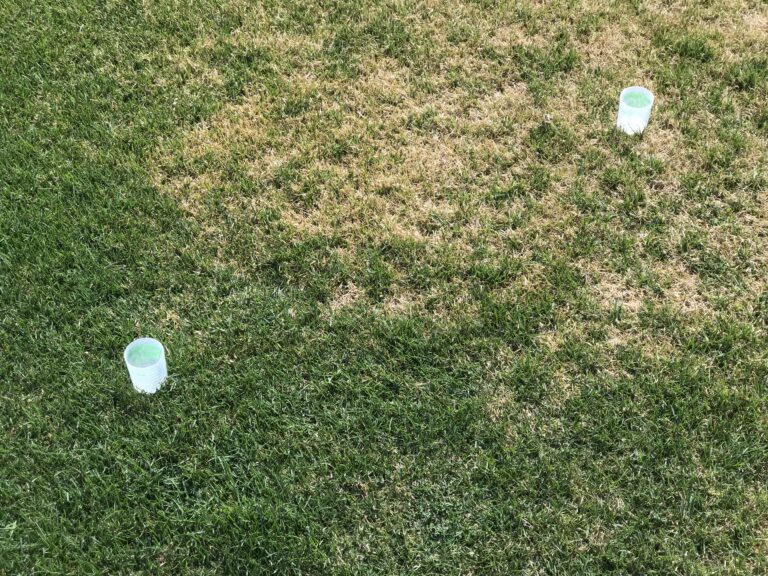
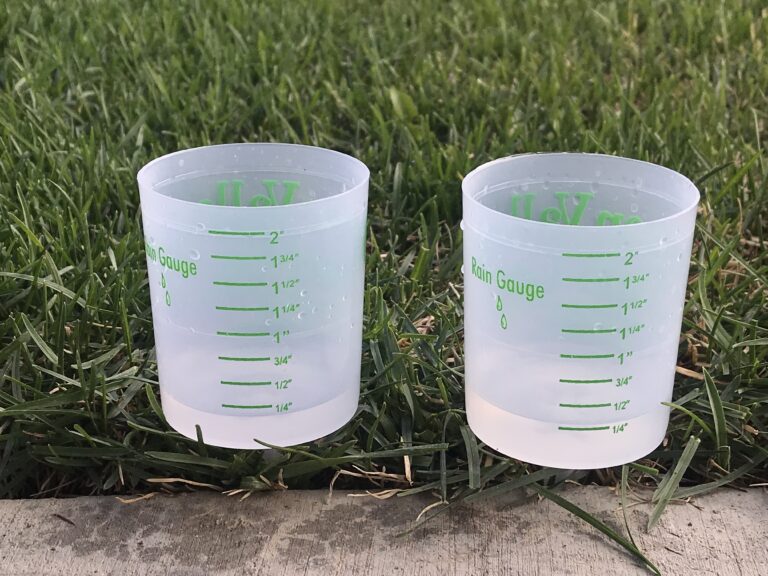
If you’ve been noticing brown spots, or generally want to make sure your sprinkler system is running efficiently, a great way to do that is with the cup test! This entails setting out various containers of the same size, plastic cups will work or rain gauges, in different locations around the yard. Place two cups in each sprinkler zone, one closer to the sprinkler head and one farther away, and run the sprinklers. This will help determine how much water is falling in each zone, and if it’s falling evenly. Often times brown spots appear because sprinklers are clogged, not property adjusted and watering your yard unevenly.

Dry or brown spots can be caused by several different sprinkler problems. Low pressure in your sprinkler heads can cause the water stream to be thin and not reach as far as needed. Alternatively, high water pressure can cause the stream to spray too far and miss the grass immediately surrounding the sprinkler head. Pop-up sprinklers can sometimes get caught in the ground and not emerge fully, only watering part of the area that they are supposed to. By performing the cup test you can check your sprinkler system and see what could be causing the lawn problem.

 The cup test is pivotal in making sure your sprinkler system is running as efficiently and effectively as it can be. By performing regular sprinkler maintenance and consistently checking that everything is up to snuff, you can cut down on your water usage while still making sure your lawn is getting enough water to keep it thriving.

Posted on

Get a Free Sod Installation Estimate in Denver Today

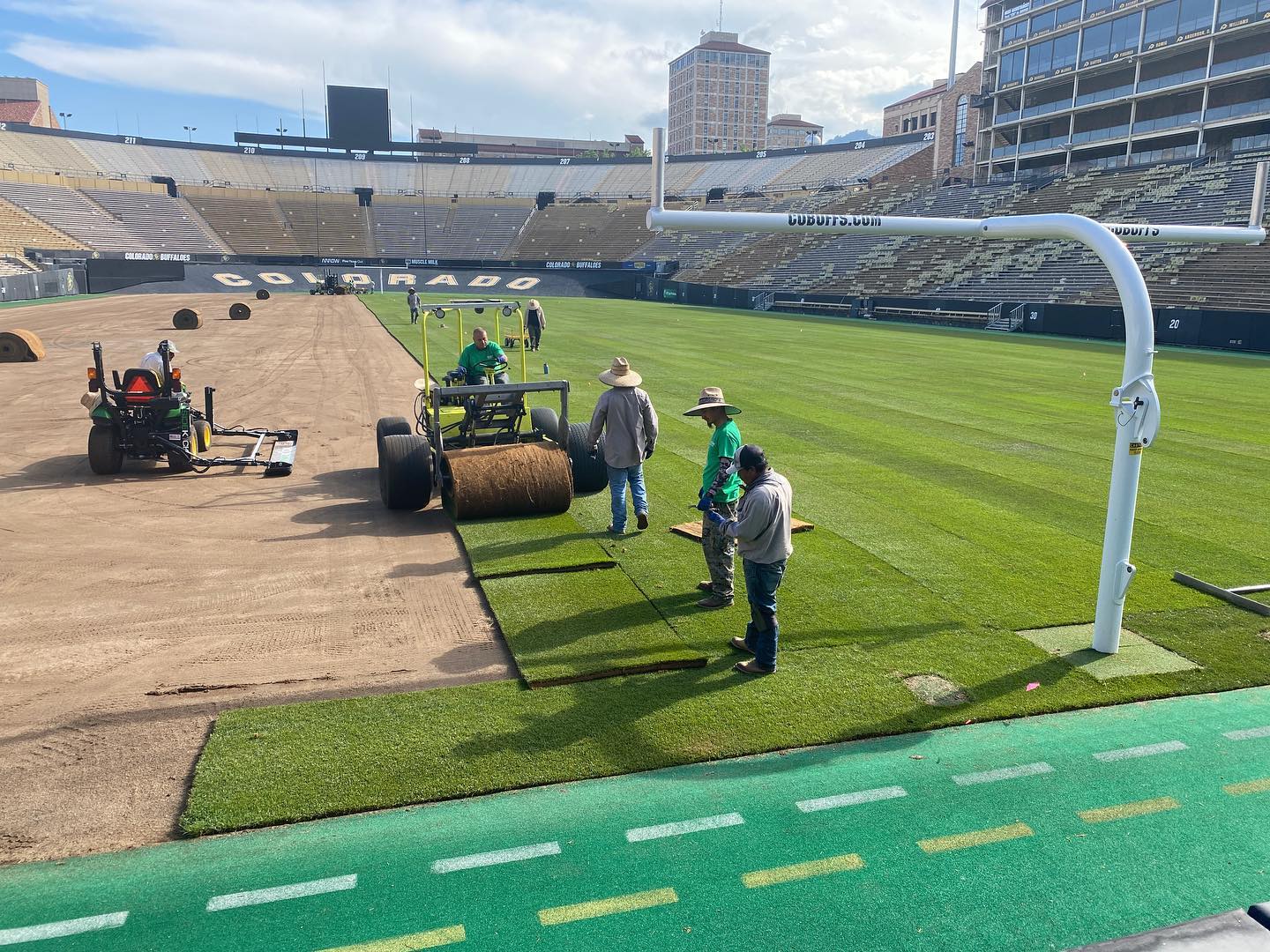
Green Valley Turf - Placing Turf on Colorado Buffaloes Stadium

Deciding to replace your lawn is an exciting step toward improving your home’s curb appeal and outdoor living space. However, the process of budgeting for a new lawn can often feel opaque and confusing. Homeowners frequently worry about hidden fees, inaccurate measurements, and the reliability of the contractors they hire. At Green Valley Turf Co., we believe that transforming your yard should be a transparent, stress-free experience, which is why we offer comprehensive, free sod installation estimates for residents across the Denver metro area.

Getting an accurate estimate is about much more than simply measuring the square footage of your yard. A proper assessment requires evaluating the current state of your landscape. Does the existing dead grass need to be torn out and hauled away? Is the soil heavily compacted clay that requires significant amendment with compost? Does the yard need to be regraded to ensure proper drainage away from your home’s foundation? Our experienced estimators evaluate all these factors to provide you with a detailed, honest quote that covers the entire scope of the project.

According to HomeAdvisor, the national average cost for professional sod installation ranges from $0.87 to $1.76 per square foot for materials and labor combined. However, in Colorado, the additional costs of soil amendment and clay remediation can significantly affect the final price. This is precisely why an on-site estimate from a local expert is so much more valuable than any online calculator. Our estimators have assessed hundreds of Denver-area yards and can quickly identify the specific challenges your property presents.

We understand that you want a beautiful lawn without any unexpected surprises on your final bill. Our free estimates break down the costs of materials, labor, and necessary soil preparation, ensuring you know exactly what you are paying for. Furthermore, when you hire Green Valley Turf, you are not dealing with unreliable subcontractors. Our installation crews are fully insured, in-house professionals who specialize exclusively in soil preparation and sod laying. They bring years of expertise and the right equipment to complete the job efficiently and correctly the first time.

If you are just beginning to explore your options and want a quick, ballpark figure before scheduling an on-site visit, we also provide an intuitive online Sod Price Calculator. This tool allows you to input your approximate square footage and select your preferred grass variety to get an instant idea of material costs. However, for a complete, full-service installation quote, nothing beats a visit from our expert team.

Don’t let the fear of unknown costs delay your backyard renovation. Trust the company that has been serving Denver homeowners since 1962. We are committed to providing premium, locally grown sod and flawless installation services at a fair, transparent price.

Ready to transform your yard? Request your free sod installation estimate in Denver today and take the first step toward a beautiful new lawn.

Posted on

What is the Best Grass for a Hot Colorado Summer?

July in Colorado brings blistering sun, soaring temperatures, and often, severe drought conditions. For homeowners with traditional lawns, this time of year is a constant battle against brown patches, heat stress, and exorbitant water bills. As you watch your grass struggle to survive the mid-summer heat, you may find yourself asking: what is actually the best grass for a hot Colorado summer? The answer depends on your specific needs, but Green Valley Turf Co. offers three premium, locally grown solutions designed to thrive when the temperatures rise.

For those who love the classic, lush look of a traditional northern lawn, our Colorado Blue™ sod is an exceptional choice. Unlike generic bluegrass found at big-box stores, Colorado Blue is a proprietary blend of elite Kentucky bluegrass varieties specifically selected for their drought tolerance and heat resistance. We have spent decades refining this blend to ensure it performs exceptionally well in the Rocky Mountain region. It establishes deep root systems that allow it to access moisture during dry spells, and its dense growth habit provides excellent wear tolerance for high-traffic summer activities.

If maximum water conservation and heat endurance are your primary goals, Tahoma 31™ Bermudagrass is the undisputed champion. As a warm-season grass, Tahoma 31 actually prefers the intense heat of July and August. While cool-season grasses may enter dormancy or require heavy watering to stay green, Tahoma 31 flourishes under the summer sun while using 50% to 75% less water. According to Colorado State University Extension, warm-season grasses like Bermudagrass are increasingly recommended for Colorado’s Front Range due to their superior heat and drought tolerance. Green Valley Turf has extensively tested Tahoma 31 to ensure it possesses the necessary cold tolerance to survive Colorado’s harsh winters, making it a viable year-round solution.

Another excellent option for the Colorado climate is our RTF® Water Saver® sod. Rhizomatous Tall Fescue is unique because it produces rhizomes — underground stems that allow the grass to self-repair and fill in damaged areas. RTF develops an incredibly deep root system, often reaching depths of up to six feet, which allows it to draw moisture from deep within the soil profile. This deep rooting makes RTF highly resilient during summer droughts, requiring up to 30% less water than standard grasses while maintaining a rich, dark green appearance throughout the hottest months.

The key to selecting the right grass for your Denver home is understanding your priorities. If you want the classic look of a cool-season lawn and are willing to water moderately, Colorado Blue is your best bet. If water savings and extreme heat tolerance are your top priorities, Tahoma 31 is the clear winner. If you want a self-repairing, deep-rooting, year-round green option that bridges the gap, RTF Water Saver is the ideal middle ground.

Choosing the right grass is the foundation of a healthy, sustainable landscape. At Green Valley Turf Co., we don’t just sell sod; we provide climate-specific solutions backed by over 60 years of local growing experience.

Don’t let the July heat destroy your lawn. Explore our premium quality sods to find the perfect fit for your home.

Posted on

The Best Dog Friendly Low Water Grass for Denver Yards

Maintaining a pristine lawn in Denver is challenging enough with our intense summer heat and strict watering restrictions. Add a lively, active dog to the mix, and the challenge often feels insurmountable. Traditional grasses quickly succumb to the wear and tear of heavy paws, while the high nitrogen and salt content in dog urine creates unsightly, dead yellow patches. If you are tired of constantly reseeding and overwatering in a futile attempt to keep your yard green, it is time to upgrade to the best dog-friendly, low-water grass available: Tahoma 31™ Bermudagrass.

When evaluating dog-friendly turf, durability is paramount. Tahoma 31 was engineered with an incredibly dense, aggressive growth habit. This dense canopy not only crowds out weeds naturally but also provides a robust, wear-resistant surface that can handle the constant running, fetching, and playing of active pets. Unlike standard Kentucky bluegrass, which can take weeks to recover from physical damage, Tahoma 31 spreads rapidly via stolons and rhizomes, allowing it to quickly fill in bare spots and self-repair before weeds can take hold.

The most notorious issue for dog owners is urine burn. The high concentration of salts in dog urine essentially dehydrates and kills traditional grass blades. According to the American Kennel Club, the nitrogen in dog urine acts similarly to a fertilizer burn, causing the characteristic yellow or brown dead spots that plague so many pet owners’ lawns. Tahoma 31, however, boasts an exceptionally high salt tolerance. This unique characteristic allows it to resist the burning effect of urine far better than other varieties. While no grass is completely immune to severe, repeated exposure, Tahoma 31 minimizes the damage and recovers much faster, keeping your lawn looking uniform and green.

Equally important for Denver homeowners is water conservation. Tahoma 31 is a warm-season grass that thrives in the July heat, requiring 50% to 75% less water than traditional cool-season grasses. You do not have to choose between a dog-friendly yard and a water-efficient one; Tahoma 31 delivers both. Furthermore, despite its toughness, the grass blades are surprisingly soft and fine-textured, providing a comfortable surface for both bare feet and sensitive paws.

Another excellent option for pet owners is RTF® Water Saver®. The self-repairing rhizomes of RTF allow it to quickly recover from damaged areas, and its deep root system makes it highly drought-tolerant. While it does not possess the same extreme salt tolerance as Tahoma 31, its rapid self-repair capability makes it a strong contender for yards with moderate pet traffic.

Green Valley Turf Co. is proud to grow Tahoma 31 locally at our Platteville farm, ensuring it is perfectly acclimated to Colorado’s climate. If you want a resilient, beautiful lawn that can withstand both the summer heat and your furry best friend, Tahoma 31 is the ultimate solution.

Create the perfect backyard oasis for your pet. Discover why Tahoma 31 is the ideal dog friendly grass for Colorado yards and order today.

Posted on

Fast Sod Delivery in Denver: Get Farm-Fresh Grass This Week

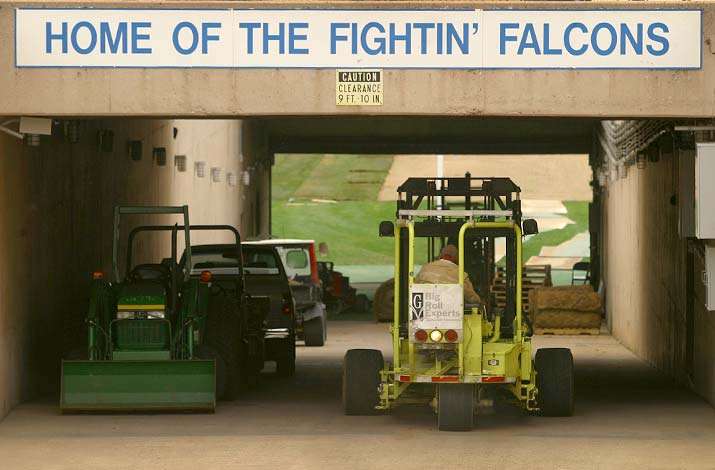
Falcon stadium thick cut sod enter

Whether you are a homeowner tackling a weekend DIY landscaping project or a professional contractor working on a tight deadline, getting high-quality sod delivered exactly when you need it is crucial. Sod is a living, breathing plant, and its viability decreases rapidly once it is harvested. In the heat of a Denver summer, delays in delivery can result in dried-out, stressed grass that struggles to establish roots. That is why Green Valley Turf Co. prioritizes fast, reliable, and farm-fresh sod delivery across the entire metro area.

Our commitment to freshness begins at our 500-acre farm in Platteville. We do not cut our sod days in advance and leave it sitting on pallets to bake in the sun. Instead, our sod is harvested fresh daily, specifically fulfilling the orders scheduled for that day. This ensures that the grass retains maximum moisture and vitality during transit. When you order from Green Valley Turf, you are receiving a product that was growing in our fields just hours before it arrives at your property.

According to Colorado State University Extension, sod should ideally be installed within 24 hours of harvest to maximize root establishment success. In hot summer conditions, this window shrinks even further. By cutting to order and delivering the same day or within 24 hours, Green Valley Turf ensures you are always working with the freshest, most viable product available. This is a standard that most big-box retailers simply cannot match.

We understand that convenience and placement are just as important as speed. Our delivery fleet is equipped with truck-carried forklifts, allowing our experienced drivers to place the pallets of sod exactly where you need them. Whether that means placing them along a driveway, near a backyard gate, or directly on the prepped soil (accessibility permitting), we strive to minimize the heavy lifting required on your end. This precise placement is a massive advantage for both DIYers and contractors, saving valuable time and physical exertion.

With a typical lead time of just 1 to 6 days, we can accommodate almost any project schedule. Whether you need a few pallets for a small patch job or a full truckload for a complete property renovation, our logistics team coordinates every detail to ensure a smooth, on-time delivery. We offer a variety of premium, locally grown options, including our elite Colorado Blue™ blend, water-saving RTF®, and the revolutionary Tahoma 31™.

Don’t risk your landscaping investment on imported, stressed grass from big-box stores. Choose the local experts who guarantee farm-fresh quality and dependable service. With Green Valley Turf Co., you can have a beautiful, thriving new lawn delivered directly to your door this week.

Planning a project? Learn more about our Denver sod delivery services and schedule your delivery today.

Posted on

Why You Should Buy Tahoma 31 Sod for Your Denver Home

When evaluating the best grass options for a Denver home, water conservation and climate resilience are usually at the top of the priority list. For decades, homeowners have struggled to balance the desire for a beautiful lawn with the reality of Colorado’s strict watering restrictions and semi-arid environment. Enter Tahoma 31™ Bermudagrass — a revolutionary turf variety that is changing the landscape of residential lawns across the Front Range.

The most compelling reason to choose Tahoma 31 for your Denver home is its extraordinary water efficiency. Compared to traditional Kentucky bluegrass, Tahoma 31 requires 50% to 75% less water to maintain its health and vibrant color. In a region where water costs are continually rising and conservation is a critical community focus, this level of efficiency translates to significant financial savings and environmental stewardship. You can enjoy a lush, green yard without the guilt of excessive water consumption.

Historically, Bermudagrass has been viewed with skepticism in colder climates due to its tendency to suffer from winterkill. However, Tahoma 31 was specifically bred for exceptional cold tolerance. Research from Oklahoma State University’s Turfgrass Science program confirms that Tahoma 31 demonstrates superior low-temperature survivability compared to other Bermudagrass varieties. Before introducing it to the local market, Green Valley Turf Co. subjected Tahoma 31 to three rigorous years of winter testing right here in Colorado. The results were outstanding — the grass consistently survived deep freezes and late spring snowstorms, proving it is fully capable of withstanding our unpredictable weather patterns.

Beyond its water savings and cold tolerance, Tahoma 31 offers remarkable durability. It features a dense, aggressive growth habit that naturally crowds out weeds, reducing the need for chemical herbicides. This density also makes it incredibly resilient to heavy foot traffic, making it an ideal choice for families with children and active dogs. Furthermore, it possesses a high salt tolerance, which helps it resist the yellowing spots commonly caused by pet urine.

According to Colorado State University Extension, warm-season grasses like Bermudagrass are increasingly viable options for the Colorado Front Range as climate patterns shift. Tahoma 31 represents the cutting edge of this category, combining the heat-loving characteristics of traditional Bermudagrass with the cold hardiness needed to survive Colorado winters. It goes dormant and turns a golden-tan color in winter, similar to how bluegrass looks in drought, but it bounces back vigorously in the spring.

Green Valley Turf Co. is proud to be a leading provider of Tahoma 31 sod in the Denver metro area. Because we grow it locally at our Platteville farm, you can trust that the sod you receive is already adapted to the Colorado sun and soil. If you are ready to upgrade your lawn to a modern, eco-friendly, and highly durable turf, Tahoma 31 is the ultimate solution.

Experience the future of Colorado lawns. Learn more about Tahoma 31 sod and order online for fast, local delivery.

Posted on

How to Replace a Dead Lawn in Denver: Sod Installation Guide

RTF® Water Saver tall fescue sod was selected for all bunker faces and would transition to bluegrass outside the bunker.

A dead or dying lawn can quickly become an eyesore, diminishing your home’s curb appeal and creating a dusty, unusable outdoor space. In Denver, the combination of intense summer heat, poor soil quality, and inadequate watering can easily destroy a traditional lawn. However, you do not have to live with a barren yard. Replacing a dead lawn with fresh, locally grown sod is the fastest and most effective way to completely transform your property.

The process of replacing a dead lawn begins with a thorough tear-out. Simply laying new sod over dead grass or hard, compacted soil is a recipe for failure. The old vegetation must be completely removed, and the underlying soil must be properly prepared. At Green Valley Turf Co., our full-service sod installation team handles every aspect of this labor-intensive process. We utilize specialized equipment to cleanly remove the dead turf, ensuring a fresh start for your new lawn.

Once the old grass is gone, soil preparation is the next critical step. Colorado’s soil is notoriously heavy in clay, which drains poorly and restricts root growth. To combat this, we incorporate high-quality compost into the topsoil, improving drainage, aeration, and nutrient availability. According to Colorado State University Extension, amending clay-heavy soils with three to four inches of compost tilled to a depth of six inches significantly improves water penetration and root development. Proper grading is also essential to ensure water flows away from your home’s foundation and prevents pooling in low areas. Our expert crews meticulously grade the site, creating a smooth, level surface that is primed for healthy root establishment.

After the soil is prepped and graded, the actual sod installation begins. Because our sod is cut fresh daily at our Platteville farm, it arrives at your home healthy, hydrated, and ready to root. We carefully lay each roll, ensuring tight seams and a seamless appearance. We also offer specialized drought-tolerant varieties, such as Tahoma 31™ and RTF® Water Saver®, which are specifically designed to thrive in Denver’s climate with minimal water.

After installation, the first 14 days are critical. New sod requires consistent moisture to encourage the roots to grow down into the prepared soil. We provide all of our customers with a detailed watering schedule that complies with Denver Water’s current restrictions while ensuring the new turf receives what it needs to establish. Typically, you will need to water two to three times per day for the first week, gradually reducing frequency as the roots anchor into the soil.

Attempting a full lawn replacement as a DIY project can be overwhelming, physically exhausting, and prone to costly mistakes. Improperly prepared soil, uneven grading, and poorly laid seams are the most common reasons DIY sod installations fail. By trusting the professionals at Green Valley Turf, you are guaranteed a flawless installation backed by over 60 years of local experience. We take the guesswork out of lawn renovation, providing you with a lush, green yard in a matter of days, not months.

Don’t wait until next year to fix your yard. Request a free sod installation estimate from Green Valley Turf Co. and let our experts handle the heavy lifting.

Posted on

Where to Buy Drought Tolerant Sod in Denver This Summer

As the Denver summer heats up and water restrictions loom, many homeowners watch in frustration as their traditional lawns turn yellow and dry. The high-altitude sun combined with our semi-arid climate makes maintaining a lush, green yard a constant battle, especially when water bills begin to skyrocket. If you are looking for a permanent solution to this seasonal struggle, it is time to consider replacing your thirsty grass with drought-tolerant sod.

Green Valley Turf Co., operating since 1962, has spent decades researching and cultivating the perfect grass varieties for Colorado’s unique environment. When deciding where to buy drought-tolerant sod in Denver, the most critical factor is choosing a local grower. Sod imported from out of state often goes into shock when exposed to our intense sun and dry air. At Green Valley Turf, our sod is grown locally at our 500-acre farm in Platteville, ensuring it is already fully acclimated to the local climate before it ever reaches your yard.

One of the most revolutionary products we offer is Tahoma 31™ Bermudagrass. Developed specifically for cold tolerance and extreme water efficiency, Tahoma 31 uses 50% to 75% less water than traditional Kentucky bluegrass. This makes it an exceptional choice for Denver homeowners who want a beautiful, resilient lawn without the exorbitant water costs. Furthermore, Tahoma 31 has been rigorously tested through three Colorado winters, proving its ability to survive our unpredictable freezes while thriving in the intense summer heat.

Another outstanding option available exclusively through Green Valley Turf in the Denver metro area is RTF® Water Saver® sod. Rhizomatous Tall Fescue (RTF) is a self-repairing grass that sends roots deep into the soil, allowing it to access moisture far below the surface. This deep-rooting system means RTF requires up to 30% less water than standard grasses while maintaining a rich, dark green color throughout the hottest months. Its self-repairing nature also makes it highly durable for families with active children and pets.

Choosing the right drought-tolerant sod is not just about saving water; it is an investment in the long-term health and beauty of your property. By selecting varieties like Tahoma 31 or RTF Water Saver, you are actively contributing to local water conservation efforts while enjoying a low-maintenance, stunning landscape. According to the Colorado Water Conservation Board, outdoor irrigation accounts for nearly 50% of residential water use across the Front Range, making turf selection one of the single most impactful decisions a homeowner can make.

The difference between locally grown and imported sod is significant and often overlooked by homeowners shopping at big-box stores. Sod grown in states like Kansas or Texas is adapted to entirely different soil compositions and humidity levels. When this grass is suddenly transplanted to a Denver yard, the shock of the altitude change, the intense UV radiation, and the dry air can cause widespread browning and root failure within the first few weeks. By purchasing from Green Valley Turf, you eliminate this risk entirely.

If you are ready to make the switch and significantly lower your summer watering costs, the process is simpler than you might think. Our team can walk you through measuring your yard, selecting the right drought-tolerant variety for your specific sun exposure and soil conditions, and scheduling a delivery or installation that fits your timeline. With a typical lead time of just 1 to 6 days, you could be enjoying a beautiful, water-efficient lawn before the end of the week.

Ready to save water and money? Use our Sod Price Calculator to estimate your project costs or request a free installation estimate today.

Posted on

McClave School Scores a Touchdown with Tahoma 31: A New Standard for Colorado Athletics

McClave School Scores a Touchdown with Tahoma 31: A New Standard for Colorado Athletics

McClave, CO — April 21, 2026

By Ross Kurcab, CSFM

At McClave School (K-12), excellence isn’t just a goal; it’s a tradition. With championship banners crowding the rafters, the school’s athletic pedigree is undeniable. However, by 2023, the crown jewel of their outdoor facilities—the football field—was failing to live up to that standard.

The Challenge: A Field in Decline


McClave School Football field. February 2024.

Thinning grass, stubborn weeds, and persistent bare patches had turned the field into a source of frustration. For Superintendent and girls’ basketball coach Brianne Howe, the situation had become a matter of athlete safety. “We had tried everything—seed, sod, you name it,” Howe recalls. “But nothing worked. It was just weeds and bare patches, and we felt it was becoming unsafe for our players.”

The struggle was compounded by the harsh realities of Southeast Colorado’s climate. Like much of the region, McClave faces significant hurdles regarding water quality and quantity. While local well water is often too saline and costly to treat, the alternative—ditch water from the Arkansas River—is unpredictable in both availability and cost during hot, dry cycles.

The Solution: Tahoma 31 Hybrid Bermudagrass

The experts at Green Valley Turf Co. identified the perfect fix: Tahoma 31 (T31). This cold-hardy hybrid bermudagrass is engineered for high-performance environments:

  • Salt Tolerance: Nearly 4x the tolerance of traditional Kentucky Bluegrass.
  • Water Efficiency: Thrives on less than half the water required by traditional bluegrass or fescue fields.
  • Durability: Exceptional traffic tolerance and resilience against Colorado’s erratic and cold winters.

Transformation and Results

In the winter of 2024, the school began a complete overhaul, rebuilding the aged irrigation system and prepping the soil for the field’s first-ever full resodding. On June 1, 2024, Tahoma 31 sod from Green Valley’s Platteville farm was installed. The field was more than ready for play by early August.

New Tahoma 31 field. September 2024

The difference was immediate. Unlike the tough, “wiry” bermudagrass varieties often found in the region, Howe describes Tahoma 31 as a “soft, lush, and tight carpet.” “It makes a great surface for our players, which is our top priority,” Howe noted. “It’s incredibly divot-resistant and recovers from the wear and tear of games and practices remarkably well.”

A Sustainable Future for the Cardinals

The community response has been overwhelmingly positive. As the only school in the area currently utilizing T31, McClave has become a point of interest for visiting teams and media alike. “I mean, they love it! We are so thankful because now we have a field everyone can be proud of.” said Howe. “We have received a lot of compliments and questions from visiting teams and the local media.”

The new Tahoma 31 field has become a source of great pride for the top-ranked "Bird Gang" and their passionate fans in SE Colorado.

The decision to go with Tahoma 31 has proven especially prophetic following Colorado’s dismal winter snowpack this year. Despite predictions of limited Arkansas River water, McClave remains confident they can maintain a beautiful, safe playing surface.

Looking Ahead:

  • Spring 2026: Encouraged by the football field’s success, McClave has begun installing Tahoma 31 on their existing baseball/softball field.
  • Fall 2027: The new McClave School campus is set to open, featuring a sustainable landscape design that utilizes reclaimed water for all athletic fields—with Tahoma 31 as the primary specification.

By choosing Tahoma 31, the McClave Cardinals have secured a field worthy of their athletes at a fraction of the cost of artificial turf, proving that high-performance sports can—and should—be sustainable.

Posted on

The Best Low Water Grass Sod Options in Littleton

Finding the best low water grass sod in Littleton is essential for maintaining a beautiful lawn while navigating hot summers and municipal watering restrictions. Green Valley Turf, growing premium sod since 1962, offers top drought-resistant varieties directly from our Littleton farm. From the ultra-efficient Tahoma 31™ Bermudagrass to the deep-rooting RTF® Water Saver®, our locally grown sod is specifically designed to withstand Colorado’s unique climate and drastically reduce your water consumption.

Why Littleton Yards Need Specialized Sod

Littleton, like much of the Front Range, sits in a semi-arid climate zone. We receive an average of just 15 to 17 inches of precipitation annually, which is significantly less than the national average. Furthermore, our soils are often heavy in clay, which can make deep root establishment difficult for generic grass varieties.

When you purchase standard grass seed or out-of-state sod from a big-box retailer, you are often getting cool-season grasses that require massive amounts of supplemental irrigation to survive our July and August heat. As local water providers continue to emphasize conservation and implement watering schedules [1], these thirsty lawns quickly become stressed, turn brown, and become susceptible to disease and weed invasion.

The solution is to plant sod that is genetically predisposed to handle drought and locally grown to acclimate to our specific environment. By choosing low water grass sod in Littleton, you are working with nature rather than fighting against it.

Top Low Water Sod Varieties Available in Littleton

At our Littleton farm location, we stock and supply three premier water-saving sod varieties. Each offers unique benefits depending on your yard’s specific microclimate and how you intend to use the space.

1. Tahoma 31™ Bermudagrass: The Ultimate Water Saver

If your primary objective is to slash your water bill, Tahoma 31™ is the undisputed leader. This revolutionary, cold-tolerant bermudagrass uses 50% to 75% less water than traditional cool-season grasses.

Unlike older bermudagrass varieties that struggled to survive Colorado winters, Tahoma 31™ was specifically bred for exceptional freeze tolerance. It thrives in the blistering summer heat, requiring only about half an inch of water per week to maintain its dense, soft, dark green canopy. It is highly resistant to high traffic and dog urine, making it perfect for active families.

Because it is a warm-season grass, it greens up in mid-April and goes dormant in October. During its dormant phase, it requires zero water. If you have a full-sun yard in Littleton and want the most environmentally friendly natural turf available, Tahoma 31™ is the answer.

2. RTF® Water Saver® Tall Fescue: Deep Roots, Dark Green

For homeowners who prefer a grass that stays green longer into the spring and fall, RTF® (Rhizomatous Tall Fescue) is an outstanding choice. What sets RTF® apart is its patented, self-repairing nature and its incredibly deep root system.

By drawing moisture from deep within the soil profile, RTF® can achieve up to 30% water savings compared to standard fescues. It does not form the unsightly clumps associated with older tall fescues; instead, it creates a thick, even, dark green lawn.

One of the biggest advantages of RTF® for Littleton homeowners is its shade tolerance. If your property features mature trees that cast significant shade, RTF® will perform beautifully where other grasses might thin out and die. Green Valley Turf is the exclusive licensed grower of RTF® for the Denver metro area, ensuring you receive the genuine, patented product.

3. Colorado Blue™ Sod: The Drought-Tolerant Classic

If you love the classic look and feel of a Kentucky Bluegrass lawn but want a more responsible option, our Colorado Blue™ sod is the perfect compromise. This is not your grandfather’s water-hogging bluegrass. It is a carefully selected blend of elite, drought-tolerant Kentucky bluegrass varieties (Hampton, Fullback, Noble, and Bewitched).

Colorado Blue™ is designed to withstand severe drought stress. During periods of extreme heat and low water, it has the ability to go dormant to protect its crown, and then recover rapidly once irrigation resumes. It is a fine-textured, highly durable grass that handles the punishment of backyard sports and pets exceptionally well. We stock Colorado Blue™ daily for pickup at our Littleton location.

The Advantage of Buying Local in Littleton

When searching for low water grass sod in Littleton, the source matters immensely. Buying directly from Green Valley Turf’s Littleton location (13159 N. US Highway 85) offers several distinct advantages:

1. Freshness: Sod is a living, breathing plant. The longer it sits on a pallet, the more stressed it becomes. We harvest our sod daily, meaning you are getting the freshest possible turf. Fresh sod roots faster and requires less emergency watering during the critical establishment phase.

2. Expert Advice: Our staff understands the specific soil conditions and microclimates of the South Metro area. When you visit our Littleton store, you can speak directly with turf experts who can help you choose the exact right grass for your yard’s sun exposure, traffic levels, and water conservation goals.

3. Convenience: Whether you need a few slabs to patch a bare spot or multiple pallets for a full yard renovation, we make the process easy. You can pick up your sod directly from our Littleton farm, or we can arrange fast, reliable delivery directly to your home.

Complete Your Water-Wise Transformation

Selecting the right sod is only the first step. To truly maximize the drought tolerance of your new lawn, proper installation is crucial. The heavy clay soils common in Littleton must be properly tilled and amended with organic compost to allow the deep roots of Tahoma 31 or RTF to penetrate and thrive.

If you are undertaking a full lawn replacement, Green Valley Turf offers comprehensive sod installation services. Our professional crews handle the heavy lifting, from tearing out your old, thirsty grass to expertly grading the soil and laying your new premium turf.

Stop fighting a losing battle against the Colorado climate. By upgrading to a modern, drought-resistant turf variety, you can enjoy a stunning lawn while doing your part to conserve our most precious resource. Visit our Littleton location today or contact us at 303-798-6764 to discuss your project and discover the best low water grass sod options for your home.

References

[1] Denver Water. “Summer Watering Rules and Restrictions.” denverwater.org.