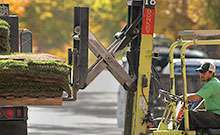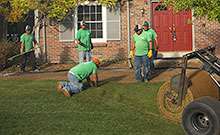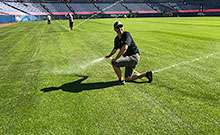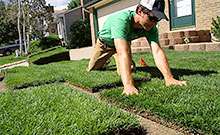
A successful sod tear-out and replacement starts with the ground beneath the lawn. Before ordering turf, identify why the existing grass failed, decide what removal and soil work the site needs, check irrigation and drainage, and confirm which turf and watering rules apply to your property.
In brief: Get the site assessed before choosing sod. Ask for a written scope covering removal, disposal, soil preparation, grading, irrigation, delivery and cleanup. Then confirm Castle Rock Water requirements and any HOA rules before setting the installation date and aftercare plan.
Green Valley Turf lists Castle Rock in its Denver Metro delivery area and describes residential sod installation services for local projects. The work and costs depend on the property, so confirm what is included in a site-specific estimate.
A lawn can thin or fail because of compaction, drainage, irrigation coverage, shade, heavy use, soil conditions or a turf type that does not suit the space. Look for bare areas, persistent wet spots, runoff, uneven grades, worn paths and places that receive little sun. Note sprinkler heads, valves, utilities, gates, steps and other access constraints.
Check how the lawn meets patios, walks, curbs and planting beds. The finished height should be planned before removal or soil work begins. If water runs toward the house, correct the grade before installing sod; new turf will not fix a drainage problem beneath it.
Not every tired lawn needs a full tear-out. Colorado State University Extension describes lawn renovation as replacing turf without the extensive tilling or grade changes involved in establishing a new lawn. For sod replacement, CSU advises removing existing vegetation and preparing the underlying soil. It cautions against laying sod over an existing lawn, thatch or heavily compacted soil. See CSU Extension’s lawn-renovation guidance.
Castle Rock’s irrigation requirements can affect both the installation date and the new lawn’s establishment plan. The Town’s rules and drought guidance can change, so check the current drought-management page and watering schedule for your address before work begins.
As checked in September 2026, the Town’s drought page says Stage 1 guidance is in effect: the regular every-third-day residential schedule applies, while customers are encouraged to follow a two-day-per-week schedule through the end of the irrigation season. The page says wrong-day violations will not be issued under that advisory. Residential irrigation hours remain before 8 a.m. or after 8 p.m. Use the Town’s current schedule rather than assuming these date-specific conditions will remain in effect.
Castle Rock Water’s residential temporary irrigation exemption form says an approved exemption may allow daily watering of new sod for up to 21 days from installation, but only during the regular permitted hours. It does not provide additional water; it allows more time to apply the water. The form says exemptions are not issued or applicable in July, only the water-account holder may apply, and an $11 fee is charged to the associated water account. Approval is not automatic. Confirm the current application requirements and the project’s eligibility before relying on an exemption.
Turf requirements also depend on the property and project. Town homeowner guidance says homes permitted and built after January 1, 2023 may not have front-yard turf and may have no more than 500 square feet of backyard turf. The Town’s 2026 Landscape and Irrigation Criteria Manual includes requirements for new residential landscaping and restrictions on some turf uses, including a limit on 100% Kentucky bluegrass in specified backyard contexts.
The manual also addresses renovation and retrofit projects, including thresholds based on the share or area of landscaping affected, and says replacement landscape materials must meet current criteria. Whether a particular replacement on an existing property is subject to specific limits can depend on the project and property. Ask Castle Rock Water to confirm the applicable requirements before selecting a variety. Check HOA requirements separately; HOA approval does not replace Town requirements.
Before work begins, clarify what the project includes. Discuss old-turf removal, loading, haul-away and disposal; soil testing or amendments; grading; irrigation adjustments; sod and delivery; installation; and cleanup. These are items to specify—not services to assume are automatically included in every quote.
Removed sod can be heavy, especially when soil is attached or the material is wet. Ask how much removal is assumed, where material will be loaded, whether hauling and disposal are included, and how extra soil or buried debris will be handled.
Tell the estimator about narrow gates, stairs, retaining walls, slopes, long carry distances and parking limits. Access can affect equipment, labor and delivery method. Green Valley Turf’s Castle Rock installation page outlines site and quote considerations. Delivery charges depend on the order size and delivery zone, so request current charges for the project address.
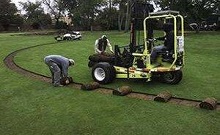
For a full replacement, remove the existing turf rather than burying it under new sod. Green Valley Turf’s sod-removal guide explains how a sod cutter can remove old turf before soil preparation. Once the lawn is exposed, check for compacted soil, poor infiltration, rocks, construction debris and low areas.
Soil work should respond to the conditions found on site. Green Valley Turf’s soil-preparation guide describes grading, compost and tilling, but the appropriate method and amendment depend on the lawn’s soil and drainage. A soil test can help determine whether amendments are needed. Ask the estimator to explain any proposed soil treatment, grade change or drainage work rather than assuming every lawn needs the same recipe.
The finished surface should be smooth, stable and graded to direct water away from structures. Do not use sod to disguise a depression, fill a deep hole or cover an active drainage problem. Correct those conditions in the base first.
Run each sprinkler zone while the soil is accessible. Look for broken heads, blocked spray, mismatched nozzles, overspray onto hardscape, runoff and dry areas between heads. Check that coverage reaches lawn edges and that the controller can operate within the current Town rules and any approved exemption.
Make needed repairs or adjustments before sod goes down where practical. After installation, run the system again and watch for dry patches or pooling. The goal is to keep the sod and underlying soil appropriately moist—not saturated or running off.
Turf selection should account for sun and shade, foot traffic, appearance, irrigation capacity and maintenance expectations. CSU Extension’s turfgrass selection guidance explains that species choice depends on the site and how the lawn will be used.
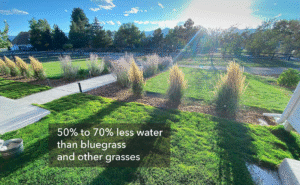
Green Valley Turf’s Colorado Blue™ sod is a Kentucky bluegrass blend described as suitable for high-traffic uses and full sun to light shade. Its Regenerate Water Wise tall fescue is described for full sun to shade, and the product page claims 15–30% less water use than bluegrass. Treat that percentage as the company’s product-page comparison, not a guaranteed saving for an individual property. Confirm availability and lead time with Green Valley Turf.
Before ordering, confirm that the variety is allowed for your property under current Town requirements and any applicable HOA standards. This is especially important for newer homes and projects that may fall under the Town’s renovation or retrofit criteria.
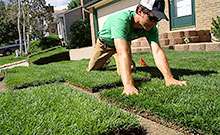
Install sod after final grading and irrigation checks, on a prepared soil surface. Fit pieces tightly without overlapping and stagger the seams to avoid long, continuous gaps. Good contact between sod and soil supports rooting; CSU Extension discusses this in its lawn-renovation guidance.
Discuss the delivery and installation method before the work date. Share the lawn dimensions, unloading location and access details, and have the estimate identify any access-related assumptions or charges.
Installation day is the start of establishment, not the end of the project. Keep the sod and the soil beneath it appropriately moist, adjusting for weather, sun, wind and soil conditions. Check the lawn and sprinkler coverage regularly for dry areas, standing water and runoff. Limit foot traffic while the sod develops roots, and follow the installer’s guidance for mowing and ongoing care.
There is no aftercare schedule that overrides Castle Rock’s current watering rules. Before installation, confirm the schedule for your address and whether an exemption has actually been approved. Use Green Valley Turf’s new-sod care resource and ask the installer for instructions suited to the selected turf and site.
Lawn area matters, but it does not tell the whole story. A site-specific quote should identify the turf and measured area, along with the assumptions for:
Green Valley Turf lists Castle Rock in its delivery zone. Its sod price calculator may help with initial planning, but use a written, site-specific quote to confirm the total project scope and cost.
For a full replacement, remove the existing turf and prepare the soil first. CSU Extension cautions against laying sod over an existing lawn, thatch or heavily compacted soil. Sod needs contact with the prepared base to root.
No. If Castle Rock Water approves an exemption, it may allow daily watering for up to 21 days, but only during the regular permitted hours. It does not add to the water budget, is not available in July, and requires an application from the water-account holder. Check the current requirements before installation.
Do not assume it is either allowed or prohibited for every existing property. Castle Rock’s criteria restrict 100% Kentucky bluegrass in specified contexts and set other requirements for new residential landscaping. Ask the Town which rules apply to your address, project scope and proposed blend.
Choose a date when the site is ready, suitable sod is available and you can follow the applicable watering rules during establishment. Ask the supplier about current availability and weather considerations, then check Castle Rock Water’s current schedule and exemption process. A general calendar may not fit every property or year.
Provide the property address, approximate lawn dimensions, photos, current turf condition, desired scope, access constraints, and any irrigation, drainage or grade concerns. Say whether you want removal, disposal, soil work, grading, sprinkler adjustments and cleanup included. Green Valley Turf’s Castle Rock installation page provides a starting point for discussing the project. You can also call (303) 798-6764 to confirm current scope and availability.
A well-planned sod tear-out and replacement in Castle Rock starts with the failed lawn, its soil and grade, the irrigation system, site access and current local requirements. Green Valley Turf can discuss removal, soil preparation, grading, sod selection, installation and cleanup as part of a coordinated project scope.
To start the conversation, share your address, lawn size, photos and project priorities. Ask for a written estimate that explains what is included, what is excluded and how unexpected site conditions could affect the work.