Planning custom-grown sports field sod in Greeley, Colorado, starts with more than choosing a grass variety. The turf needs to suit the field’s use and the rootzone beneath it, while delivery, installation access, irrigation, and downtime all fit the project schedule.
Green Valley Turf lists sand-grown HD Sports 2.0 bluegrass, T1 bentgrass, and Dominant X-Treme 7 bentgrass, as well as HD Sports 2.0 shortcut-grown in sandy loam for native-soil applications. The company also describes custom growing and custom rootzone options. These are starting points for a project discussion—not a substitute for confirming product availability and compatibility with the field’s design.
Before requesting a quote, define what the surface must support. Note the sport or sports, expected traffic, field orientation, sunlight, maintenance equipment, line-painting practices, and event schedule. A multiuse practice field, baseball outfield, football goal mouth, and sand-based competition field may call for different turf and renovation plans.
Then describe the existing field system. Is the work a full renovation, a localized repair, or a replacement surface over an engineered sand rootzone? Gather any available as-built drawings, rootzone tests, geotechnical reports, drainage plans, and irrigation drawings. These details help the project team evaluate the proposed sod in context.
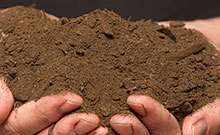
“Sand-based” is not a complete rootzone specification. The USGA explains that even a sand-based putting green is not automatically a USGA-built green: material properties, rootzone depth, gravel, and drainage design all matter. Although that guidance concerns putting greens, the broader lesson applies to field planning too: document what is below the turf rather than relying on a general label.
Green Valley Turf’s golf and sports turf information describes its current product options. Its custom-growing page also outlines custom sod and rootzone discussions. Ask the supplier to confirm which product, growing medium, and project details are appropriate for your field.
A clear, consistent bid package helps facility owners compare proposals and identify assumptions before work begins. Include:
Avoid inserting a generic custom-growing duration into the bid. Growing and delivery plans depend on the selected product, scope, growing program, destination, and installation requirements. Provide the decision date and target window, then ask Green Valley Turf to confirm feasibility and timing for the specific project.
Greeley is listed in Green Valley Turf’s current sod delivery information. Because a specialty field project may involve different quantities, equipment, roll formats, and access needs than a standard sod delivery, confirm the applicable delivery plan and charges in the project quote—especially for a 2027 schedule.
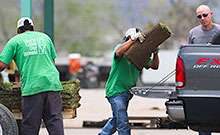
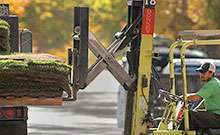
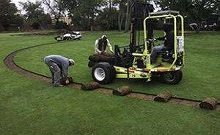
Big rolls can reduce the number of seams across a large area, but the equipment needs a workable route. Map the path from the public road to the staging area and field. Check gates, curbs, slopes, overhead obstructions, utilities, pavement limits, and whether the field perimeter can support equipment without damaging prepared grades.
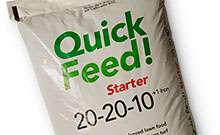
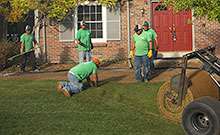
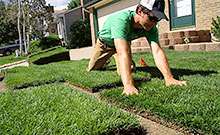
Green Valley Turf says its modified installation equipment uses full-flotation tires and that its installation service includes fertilizer application, sod installation, rolling, and cleanup. Review those items as proposed scope, not assumptions. The quote should state what is included and who is responsible for mobilization, existing-turf removal, fine grading, rootzone placement, irrigation adjustments, field protection, and restoration beyond the work limits. See the company’s big-roll installation information when preparing questions.
Describe the existing surface and the work it needs. Depending on field conditions, the project may involve full turf removal, targeted repairs, cultivation, rootzone blending, laser grading, drainage corrections, or a combination of tasks. Identify irrigation heads, valve boxes, utilities, field anchors, fencing, and drainage structures before construction begins.
Green Valley Turf describes sports-field repair work and cultivation capabilities on its sports pages. A stated equipment capability does not determine the right depth, sequence, or treatment for a particular site. Let the field drawings, specifications, and verified conditions guide those decisions.
Write the final scope in plain terms. Identify who supplies and places rootzone material, verifies elevations, adjusts irrigation components, manages spoils, meets finish tolerances, and completes cleanup. Clear responsibilities reduce the chance of gaps between the turf, site-preparation, and irrigation work.
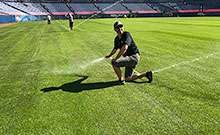
Irrigation settings should respond to the turf, soil, weather, and observed moisture—not just a calendar. Colorado State University Extension notes that sandy soils retain less plant-available moisture than clay or loam soils, so they generally need lighter, more frequent watering. This is general guidance, not a field-specific irrigation prescription.
Before renovation, review station coverage, precipitation rates, pressure, controller access, drainage outfalls, and whether the full installation can be watered evenly. Agree on who monitors moisture, who can adjust the controller, and how watering will be coordinated with weather and field access. The CSU Extension turf management guide provides background on the soil and irrigation factors that affect turf.
Build the schedule around practices, games, rentals, maintenance operations, and weather-sensitive work. Identify what must be complete before sod installation, what activity must stop afterward, and who has authority to reopen the field.
Do not promise a fixed return-to-play date before the site, scope, and establishment plan have been reviewed. Weather, rootzone conditions, irrigation performance, and finishing work can affect the sequence. Sod grown on plastic may be an option to discuss for projects with tight event intervals, but the installation method alone should not determine when a field is ready for use. Protect the renovated surface, document its handoff condition, and base reopening on the owner’s field-management standards. The Sports Field Management Association offers resources focused on sports-field management and athlete safety.
The company describes custom-grown sports turf and custom rootzone options. Submit the intended use, turf preference, rootzone information, square footage, delivery location, drawings, bid date, and desired installation window. Confirm the proposed product, schedule, and availability for the specific project.
No. Turf selection depends on the rootzone beneath it, drainage design, field use, traffic, and maintenance program. Provide project documentation so the proposed sod can be evaluated against the field system.
Share a site plan and photos showing the delivery route, gates, slopes, curbs, overhead restrictions, staging space, field perimeter, and areas that must remain protected. Confirm equipment access before bid acceptance—not when the crew arrives.
Include field dimensions, work limits, turf and rootzone requirements, removal and grading needs, irrigation and drainage information, access constraints, work window, field-use restrictions, drawings, specifications, and the bid deadline.
To begin a Greeley sports-field sod review, share the field’s intended use, turf preference, rootzone information, square footage, access plan, irrigation status, work scope, downtime constraints, drawings, delivery destination, and bid date. Use Green Valley Turf’s sports and golf sod information as a starting point, then contact the company to confirm the proposed scope, availability, and next steps. Call (303) 798-6764.
A successful custom-grown sports field sod renovation depends on a complete project brief, compatible turf and rootzone, a practical access and installation plan, and a schedule that respects both field operations and the playing surface.